
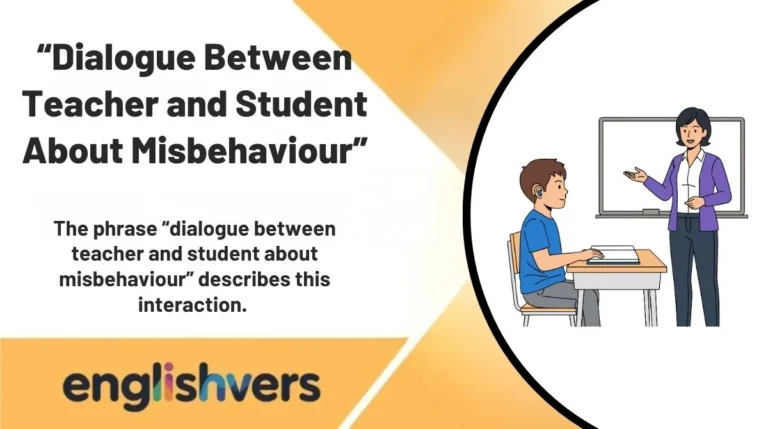
When a teacher speaks with a student about misbehaviour, the conversation can be delicate.
The phrase “dialogue between teacher and student about misbehaviour” describes this interaction.
It’s not just a description—it conveys authority, guidance, and sometimes correction.
Choosing the right words matters because tone, professionalism, and clarity can change how the message is received.
For English learners and professionals, knowing alternative expressions is essential. Different situations demand different tones.
For example, saying “I need to talk to you about your behaviour” is formal and professional.
In contrast, “Hey, you’ve been a bit naughty today” is informal and friendly.
Using varied expressions makes communication smoother, whether in business emails, essays, classroom interactions, or casual conversation.
It also helps you sound more confident and natural in English.
What Does “Dialogue Between Teacher and Student About Misbehaviour” Mean?
Definition: It is a conversation where a teacher addresses a student’s inappropriate actions to correct or guide them.
Grammar Form: This is a noun phrase. You can also turn it into verbs like “discuss misbehaviour” or “address misbehaviour.”
Synonyms (formal): disciplinary discussion, behavior review, corrective meeting
Synonyms (informal): chat about actions, talk about behaviour, check-in conversation
Opposites: praise discussion, commendation dialogue
Example Sentences:
- The teacher held a dialogue with the student about misbehaviour to help them improve.
- We need a quick chat about your actions today before the next class.
When to Use “Dialogue Between Teacher and Student About Misbehaviour”
Spoken English: Ideal for classrooms or discussions at school. “I need to have a dialogue with you about your misbehaviour.”
Business English: Can be used metaphorically for mentoring or HR discussions. “We had a dialogue about performance concerns.”
Emails / Messages: Works in formal reporting. “Please schedule a dialogue with the student regarding their recent conduct.”
Social Media: Rarely used; “conversation about behaviour” might sound better for posts.
Academic Writing: Appropriate in research papers, education journals, or reports.
Professional Meetings: Useful for teacher training, HR, or student guidance sessions.
Is “Dialogue Between Teacher and Student About Misbehaviour” Polite or Professional?
Tone Levels:
- Polite: Yes, when phrased carefully (“I’d like to have a dialogue with you about your behaviour”).
- Neutral: Safe in all professional settings.
- Strong: Could sound harsh if direct (“We need to address your misbehaviour”).
- Soft: Can be softened with “discussion” or “chat.”
Formal vs Informal:
- Formal: “Disciplinary meeting,” “behavioral discussion.”
- Informal: “Talk about what happened,” “chat about your actions.”
Etiquette Tip: Use formal phrases in emails or professional contexts. Avoid slang or overly casual expressions in corporate or academic environments.
Pros & Cons of Using “Dialogue Between Teacher and Student About Misbehaviour”
✔ Pros:
- Sounds professional and neutral
- Shows authority without rudeness
- Suitable for academic or business writing
- Clear meaning
✘ Cons:
- Can sound stiff in casual conversation
- Long phrase, not suitable for short messages
- May seem formal for young students
Quick Alternatives List
- Disciplinary discussion
- Behavior review
- Corrective talk
- Conduct conversation
- Guidance meeting
- Performance chat
- Mentoring discussion
- Behavior check-in
- Conduct feedback session
- Talk about actions
- Correction meeting
- Counseling discussion
- Guidance conversation
- Misconduct review
- Behavioral intervention
- Student feedback meeting
- Remedial conversation
17 Alternatives Explained
1. Disciplinary Discussion
Meaning: Formal talk about rules and consequences.
Explanation: Often used in schools or corporate HR settings. Shows seriousness and authority.
Grammar Note: Noun phrase, formal
Example Sentence: The principal scheduled a disciplinary discussion with the student.
Best Use: Formal, workplace, email
Worst Use: Casual chat with peers
Tone: Formal / Professional
Level: Intermediate
Similarity Score: 9
Replaceability Tip: Use when emphasizing rules and consequences.
2. Behavior Review
Meaning: Assessment of a student’s actions.
Explanation: Neutral and professional. Highlights reflection, not punishment.
Grammar Note: Noun phrase, formal
Example Sentence: Teachers conducted a behavior review for all students last week.
Best Use: Workplace, academic reports
Worst Use: Informal conversation
Tone: Neutral / Professional
Level: Beginner–Intermediate
Similarity Score: 8
Replaceability Tip: Good for written reports and meetings.
3. Corrective Talk
Meaning: Discussion intended to correct actions.
Explanation: Less formal, approachable, emphasizes guidance over punishment.
Grammar Note: Noun phrase, semi-formal
Example Sentence: The counselor had a corrective talk with the student.
Best Use: Spoken English, counseling
Worst Use: Corporate formal email
Tone: Friendly / Neutral
Level: Beginner
Similarity Score: 9
Replaceability Tip: Use in person for approachable correction.
4. Conduct Conversation
Meaning: Talk about behaviour or conduct.
Explanation: Neutral tone, suitable for formal or semi-formal settings.
Grammar Note: Noun phrase, formal
Example Sentence: She arranged a conduct conversation to address classroom behaviour.
Best Use: Formal meetings, reports
Worst Use: Casual chats
Tone: Formal / Neutral
Level: Intermediate
Similarity Score: 8
Replaceability Tip: Best for professional clarity.
5. Guidance Meeting
Meaning: A meeting to guide or advise the student.
Explanation: Focuses on mentoring, not reprimanding.
Grammar Note: Noun phrase, formal
Example Sentence: A guidance meeting was held to discuss student improvement.
Best Use: Academic, professional
Worst Use: Informal setting
Tone: Formal / Soft
Level: Beginner–Intermediate
Similarity Score: 7
Replaceability Tip: Use when correction is paired with advice.
6. Performance Chat
Meaning: Informal discussion about actions or results.
Explanation: Friendly tone, suitable for semi-formal settings.
Grammar Note: Noun phrase, informal
Example Sentence: I had a performance chat with my mentee.
Best Use: Informal meetings, text messages
Worst Use: Formal report
Tone: Friendly / Neutral
Level: Beginner
Similarity Score: 6
Replaceability Tip: Use for approachable tone.
7. Mentoring Discussion
Meaning: Advice-focused conversation with guidance
Explanation: Emphasizes teaching, not punishment
Grammar Note: Noun phrase, formal
Example Sentence: The teacher held a mentoring discussion to improve student habits.
Best Use: Academic, workplace mentoring
Worst Use: Casual remark
Tone: Professional / Soft
Level: Intermediate
Similarity Score: 7
Replaceability Tip: Use when focusing on guidance.
8. Behavior Check-In
Meaning: Informal review of actions
Explanation: Casual, friendly way to address behaviour
Grammar Note: Noun phrase, informal
Example Sentence: I did a quick behavior check-in with the student today.
Best Use: Text, spoken, social settings
Worst Use: Formal email
Tone: Friendly / Neutral
Level: Beginner
Similarity Score: 6
Replaceability Tip: Great for daily informal conversations.
9. Conduct Feedback Session
Meaning: Professional feedback on actions
Explanation: Focus on evaluation and guidance
Grammar Note: Noun phrase, formal
Example Sentence: The school scheduled a conduct feedback session for the class.
Best Use: Workplace, academic report
Worst Use: Informal chat
Tone: Formal / Professional
Level: Intermediate
Similarity Score: 8
Replaceability Tip: Use for structured evaluation.
10. Talk About Actions
Meaning: Informal conversation addressing behaviour
Explanation: Casual and friendly, good for younger students
Grammar Note: Verb phrase
Example Sentence: Let’s have a talk about your actions in class.
Best Use: Informal, spoken
Worst Use: Formal reports
Tone: Friendly / Neutral
Level: Beginner
Similarity Score: 9
Replaceability Tip: Use for approachable correction.
11. Correction Meeting
Meaning: Formal session to correct misbehaviour
Explanation: Serious, professional tone
Grammar Note: Noun phrase, formal
Example Sentence: A correction meeting was organized to address repeated misbehaviour.
Best Use: School administration, HR
Worst Use: Casual talk
Tone: Formal / Strong
Level: Intermediate
Similarity Score: 9
Replaceability Tip: Use when authority must be clear.
12. Counseling Discussion
Meaning: Focused on guidance and improvement
Explanation: Supportive rather than punitive
Grammar Note: Noun phrase, formal
Example Sentence: The teacher led a counseling discussion about class behaviour.
Best Use: Academic, mentoring
Worst Use: Casual joke
Tone: Soft / Professional
Level: Intermediate
Similarity Score: 7
Replaceability Tip: Use when support is emphasized.
13. Guidance Conversation
Meaning: Informal mentoring talk
Explanation: Soft and friendly correction
Grammar Note: Noun phrase
Example Sentence: I had a short guidance conversation with the student.
Best Use: Spoken English, casual feedback
Worst Use: Formal email
Tone: Friendly / Soft
Level: Beginner
Similarity Score: 6
Replaceability Tip: Use for approachable advice.
14. Misconduct Review
Meaning: Formal evaluation of rule-breaking
Explanation: Professional, serious tone
Grammar Note: Noun phrase
Example Sentence: The principal conducted a misconduct review after repeated incidents.
Best Use: Formal reports, meetings
Worst Use: Friendly chat
Tone: Formal / Strong
Level: Advanced
Similarity Score: 9
Replaceability Tip: Use for serious disciplinary cases.
15. Behavioral Intervention
Meaning: Formal action to correct misbehaviour
Explanation: Professional, planned approach
Grammar Note: Noun phrase, formal
Example Sentence: A behavioral intervention was implemented for the student.
Best Use: Academic, HR
Worst Use: Casual discussion
Tone: Formal / Neutral
Level: Advanced
Similarity Score: 8
Replaceability Tip: Use when structured support is needed.
16. Student Feedback Meeting
Meaning: Meeting to provide feedback to the student
Explanation: Neutral, professional, development-focused
Grammar Note: Noun phrase, formal
Example Sentence: The teacher held a student feedback meeting to address class conduct.
Best Use: Academic, workplace
Worst Use: Informal chat
Tone: Formal / Neutral
Level: Intermediate
Similarity Score: 8
Replaceability Tip: Best for structured feedback.
17. Remedial Conversation
Meaning: Talk to improve behaviour
Explanation: Focus on correction and learning
Grammar Note: Noun phrase, semi-formal
Example Sentence: The counselor initiated a remedial conversation after the incident.
Best Use: Academic, semi-formal meetings
Worst Use: Casual messages
Tone: Neutral / Professional
Level: Intermediate
Similarity Score: 8
Replaceability Tip: Use for supportive correction.
Mini Dialogue Examples
Formal Dialogue:
Teacher: “We need to schedule a disciplinary discussion about your behaviour in class.”
Student: “I understand, I’ll be ready.”
Informal Dialogue:
Teacher: “Hey, let’s have a chat about what happened today.”
Student: “Sure, I’ll explain.”
Business Email Example:
Subject: Behavior Review Meeting
Dear [Student Name],
Please attend a behavior review meeting tomorrow at 10 AM regarding your recent classroom conduct.
Best regards,
[Teacher Name]
Mistakes to Avoid
- Using overly casual language in formal emails
- Confusing “feedback” with “punishment”
- Mispronouncing formal terms in spoken English
- Overusing the word “misbehaviour”
- Ignoring tone for different audiences
- Mixing slang with professional alternatives
- Using long phrases in short messages
Cultural & Tone Tips
- In UK English, formal terms like disciplinary discussion are standard.
- In US English, friendly alternatives like behavior check-in are common.
- Casual social English often favors chat about actions or quick talk.
- Tone affects perception: harsh words may seem rude; soft words may seem weak.
Comparison Table
| Phrase | Tone | Best Context | Professional Level | Example |
|---|---|---|---|---|
| Disciplinary Discussion | Formal | Academic / HR | High | Principal scheduled a meeting |
| Behavior Review | Neutral | Reports | Medium | Teachers conducted a review |
| Corrective Talk | Friendly | Counseling | Low | Counselor had a corrective talk |
| Guidance Meeting | Soft | Academic | Medium | Guidance meeting scheduled |
| Misconduct Review | Strong | Serious Cases | High | Misconduct review held |
FAQs
Q1: Is this phrase rude?
A1: No, it is neutral. Tone depends on context.
Q2: Is it okay in emails?
A2: Yes, especially in formal academic or professional emails.
Q3: What is the most formal alternative?
A3: Disciplinary discussion or misconduct review.
Q4: What is the most polite alternative?
A4: Guidance meeting or mentoring discussion.
Q5: Can beginners use it?
A5: Beginners should use talk about actions or behavior check-in.
Q6: When should I avoid it?
A6: Avoid in casual messages or friendly social chats.
Conclusion
Using alternatives to “dialogue between teacher and student about misbehaviour” makes your English clearer and more professional. Different phrases allow you to adjust tone, formality, and context. By practicing these alternatives, you can communicate confidently in classrooms, emails, reports, and casual conversation. Variety in language not only improves clarity but also makes interactions more natural and effective.

Ethan Cole is a passionate language enthusiast dedicated to making English learning simple and enjoyable.