
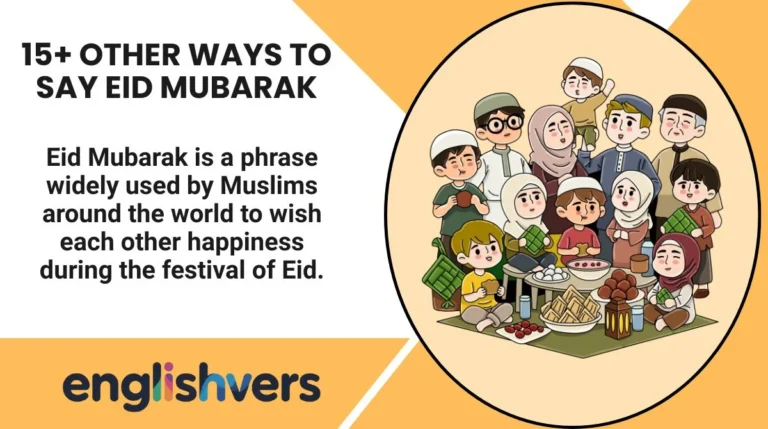
Eid Mubarak is a phrase widely used by Muslims around the world to wish each other happiness during the festival of Eid.
Literally, it means “Blessed Eid” or “Happy Eid.”
While this greeting is heartfelt and culturally significant, there are many occasions—especially in professional, academic, or social media settings
where using alternative expressions can make your communication feel more polished, natural, or context-appropriate.
Choosing the right phrase impacts your tone, professionalism, and clarity. For example, saying “Eid Mubarak!” in a friendly chat is perfect, but in a formal corporate email,
“Wishing you a joyous and prosperous Eid” can sound more professional and respectful. Using varied expressions not only helps in social interactions but also strengthens writing skills in emails, essays, and presentations.
What Does “Eid Mubarak” Mean?
Definition: A greeting used during the Islamic festival of Eid to wish happiness, blessings, and joy.
Grammar Form: Interjection / Fixed phrase
Synonyms: Happy Eid, Blessed Eid, Joyous Eid
Opposite Tone Phrases: Condolences, neutral greetings like “Hello” (not appropriate for Eid)
Example Sentences:
- Informal: Eid Mubarak! Hope you enjoy the festival with your family.
- Formal: Wishing you a blessed Eid filled with peace and happiness.
When to Use “Eid Mubarak”
Spoken English: Perfect for face-to-face conversations, phone calls, or casual chats.
Business English: Use formal alternatives like “Wishing you a joyous Eid” to maintain professionalism.
Emails / Messages: Can be slightly adapted: “May this Eid bring you prosperity and joy.”
Social Media: Short, cheerful versions like “Happy Eid to everyone!” work well.
Academic Writing: Only in cultural essays or descriptive writing; avoid casual greetings.
Professional Meetings: Use formal phrases to acknowledge the festival without being overly casual.
Is “Eid Mubarak” Polite or Professional?
Tone Levels:
- Polite: Very polite when used correctly.
- Neutral: Commonly neutral in informal settings.
- Strong: Strongly conveys emotion and warmth.
- Soft: Soft and friendly for casual conversations.
Formal vs Informal:
- Informal: Eid Mubarak! (friends/family)
- Formal: Wishing you a blessed and joyous Eid (corporate/workplace)
Etiquette Tip: Use formal alternatives in professional emails to show respect and cultural awareness.
Pros & Cons of Using “Eid Mubarak”
✔ Pros:
- Short and easy to remember
- Universally understood among Muslims
- Shows cultural awareness
✘ Cons:
- Can be too casual in professional or academic settings
- May not fully convey a personalized message
- Limited emotional nuance
Quick Alternatives List (One-Line Phrases Only):
- Happy Eid!
- Wishing you a blessed Eid
- Eid Greetings
- Joyous Eid to you
- May your Eid be filled with happiness
- Blessings to you on Eid
- Eid Kareem (more formal)
- Wishing you peace this Eid
- Have a wonderful Eid
- Prosperous Eid wishes
- Eid Salam
- Heartfelt Eid wishes
- Eid joy and blessings
- Celebrate Eid with happiness
- May Eid bring you success
- Warm wishes this Eid
Main Body: 15 Alternatives
1. Happy Eid
Meaning: A simple, cheerful greeting.
Explanation: Casual, friendly, suitable for social media or chatting with friends.
Grammar Note: Fixed phrase, interjection
Example Sentence: Happy Eid! Hope you enjoy the festivities.
Best Use: Informal, text messages, social media
Worst Use: Formal business emails
Tone: Friendly
Level: Beginner
Similarity Score: 10
Replaceability Tip: Use when speaking with friends or family.
2. Wishing You a Blessed Eid
Meaning: Expressing spiritual blessings.
Explanation: Formal and respectful, often used in emails or professional messages.
Grammar Note: Formal phrase
Example Sentence: Wishing you a blessed Eid and a wonderful time with your family.
Best Use: Workplace emails, formal texts
Worst Use: Informal chats with friends
Tone: Formal
Level: Intermediate
Similarity Score: 9
Replaceability Tip: Replace Eid Mubarak in professional settings.
3. Joyous Eid to You
Meaning: Highlighting joy and happiness.
Explanation: More celebratory, ideal for festive cards or social media.
Grammar Note: Formal phrase
Example Sentence: Joyous Eid to you and your loved ones!
Best Use: Cards, emails, messages
Worst Use: Casual in-person chat
Tone: Friendly-formal
Level: Intermediate
Similarity Score: 8
Replaceability Tip: Use in semi-formal social greetings.
4. Eid Greetings
Meaning: Neutral, formal acknowledgment
Explanation: Professional yet simple, great for corporate messaging.
Grammar Note: Noun phrase
Example Sentence: Eid Greetings to our valued clients.
Best Use: Workplace emails
Worst Use: Personal informal messages
Tone: Neutral-formal
Level: Beginner
Similarity Score: 7
Replaceability Tip: Good for corporate or organizational greetings.
5. May Your Eid Be Filled with Happiness
Meaning: Expressing goodwill and positivity
Explanation: Warm, more personal than traditional Eid Mubarak
Grammar Note: Full sentence greeting
Example Sentence: May your Eid be filled with happiness and laughter.
Best Use: Social messages, letters
Worst Use: Short, casual texts
Tone: Friendly, warm
Level: Intermediate
Similarity Score: 9
Replaceability Tip: Use for close friends and family for a heartfelt touch.
6. Blessings to You on Eid
Meaning: Spiritual blessing-focused greeting
Explanation: Shows sincerity, suitable for professional or personal use
Grammar Note: Formal phrase
Example Sentence: Sending blessings to you on Eid.
Best Use: Formal emails, religious settings
Worst Use: Very casual texts
Tone: Polite, formal
Level: Intermediate
Similarity Score: 8
Replaceability Tip: Use in semi-formal to formal greetings.
7. Eid Kareem
Meaning: “Generous Eid,” common in Arabic-speaking regions
Explanation: Formal, culturally rich alternative
Grammar Note: Interjection / Phrase
Example Sentence: Eid Kareem to all our colleagues.
Best Use: Formal, multicultural settings
Worst Use: Informal English-only texts
Tone: Formal
Level: Advanced
Similarity Score: 9
Replaceability Tip: Use in multicultural professional emails.
8. Wishing You Peace This Eid
Meaning: Focus on serenity and calm
Explanation: Spiritual and reflective, ideal for professional letters or cards
Grammar Note: Sentence structure
Example Sentence: Wishing you peace and joy this Eid.
Best Use: Emails, letters, cards
Worst Use: Short social messages
Tone: Formal
Level: Intermediate
Similarity Score: 8
Replaceability Tip: Great for conveying deeper emotion in formal greetings.
9. Have a Wonderful Eid
Meaning: Simple, warm, and personal
Explanation: Informal yet polite, friendly greeting
Grammar Note: Imperative sentence
Example Sentence: Have a wonderful Eid with your family!
Best Use: Informal messages, family chats
Worst Use: Formal corporate emails
Tone: Friendly
Level: Beginner
Similarity Score: 9
Replaceability Tip: Casual settings with friends or relatives.
10. Prosperous Eid Wishes
Meaning: Emphasis on success and well-being
Explanation: Professional and formal
Grammar Note: Noun phrase
Example Sentence: Prosperous Eid wishes to all our clients.
Best Use: Business emails, professional cards
Worst Use: Social media casual posts
Tone: Formal
Level: Intermediate
Similarity Score: 8
Replaceability Tip: Best for corporate greetings.
11. Eid Salam
Meaning: Peaceful greeting, culturally respectful
Explanation: Arabic/Islamic influence, suitable in religious contexts
Grammar Note: Fixed phrase
Example Sentence: Eid Salam! May you find joy and peace.
Best Use: Religious events, formal emails
Worst Use: Very casual informal chat
Tone: Polite, formal
Level: Intermediate
Similarity Score: 9
Replaceability Tip: Best for formal religious occasions.
12. Heartfelt Eid Wishes
Meaning: Expressing genuine emotion
Explanation: Personal and sincere
Grammar Note: Noun phrase
Example Sentence: Heartfelt Eid wishes to my dear friends.
Best Use: Personal emails, cards
Worst Use: Corporate communication
Tone: Friendly, warm
Level: Intermediate
Similarity Score: 8
Replaceability Tip: Use to convey closeness and sincerity.
13. Eid Joy and Blessings
Meaning: Emphasizes both happiness and blessings
Explanation: Balanced, polite, and slightly formal
Grammar Note: Noun phrase
Example Sentence: Wishing you Eid joy and blessings this season.
Best Use: Formal or semi-formal emails
Worst Use: Casual texting
Tone: Polite, formal
Level: Intermediate
Similarity Score: 8
Replaceability Tip: Ideal for mixed audiences.
14. Celebrate Eid with Happiness
Meaning: Encourages festive enjoyment
Explanation: Cheerful and lively
Grammar Note: Imperative sentence
Example Sentence: Celebrate Eid with happiness and love!
Best Use: Social media, messages
Worst Use: Formal emails
Tone: Friendly, upbeat
Level: Beginner
Similarity Score: 9
Replaceability Tip: Great for casual greetings.
15. Warm Wishes This Eid
Meaning: General, polite greeting
Explanation: Friendly but versatile for many contexts
Grammar Note: Noun phrase
Example Sentence: Warm wishes this Eid to you and your family.
Best Use: Emails, cards, messages
Worst Use: Very casual, in-person greetings
Tone: Polite, friendly
Level: Beginner
Similarity Score: 9
Replaceability Tip: Safe choice for most occasions.
Mini Dialogue Examples
Formal Dialogue:
- A: “Wishing you a blessed Eid, Mr. Khan.”
- B: “Thank you. Eid Mubarak to you as well.”
Informal Dialogue:
- A: “Eid Mubarak, Ali! Got any special plans?”
- B: “Eid Mubarak! Just a small family gathering.”
Business Email Example:
- Subject: Warm Eid Greetings
- Body: Dear Team, Wishing you a joyous and prosperous Eid. May this season bring happiness and success to you and your families.
Mistakes to Avoid
- Using informal “Eid Mubarak” in corporate emails
- Forgetting cultural nuance in professional settings
- Overusing the same phrase repeatedly
- Using phrases with incorrect grammar
- Using casual phrases in formal reports or essays
- Assuming all recipients understand the phrase
- Ignoring tone differences between UK and US English
Cultural & Tone Tips
- UK English: Slightly formal tone preferred in emails
- US English: More casual usage acceptable, but professionalism matters
- Casual Social English: Short, cheerful greetings work best
Native speakers often appreciate personalized messages that match context and relationship.
Comparison Table: Best Alternatives
| Phrase | Tone | Best Context | Professional Level | Example |
|---|---|---|---|---|
| Wishing You a Blessed Eid | Formal | Email, Letter | High | Wishing you a blessed Eid. |
| Happy Eid | Friendly | Social media, Chat | Low | Happy Eid! |
| Joyous Eid to You | Friendly | Cards, Messages | Medium | Joyous Eid to you! |
| Eid Kareem | Formal | Multicultural Email | High | Eid Kareem to all colleagues. |
| Prosperous Eid Wishes | Formal | Business Email | High | Prosperous Eid wishes to our clients. |
FAQs
Is “Eid Mubarak” rude?
No, it’s polite and culturally respectful.
Is it okay in emails?
Yes, but use formal alternatives for professional emails.
What is the most formal alternative?
Wishing you a blessed and joyous Eid.
What is the most polite alternative?
Warm wishes this Eid.
What should beginners use?
Happy Eid! or Eid Mubarak!
Can I use it on social media?
Yes, short phrases like Happy Eid! work best.
Conclusion
Using varied ways to say Eid Mubarak helps improve clarity, tone, and professionalism in your communication.
Whether chatting with friends, writing emails, or posting on social media, the right phrase makes your greeting feel natural and culturally aware.
Practicing these alternatives boosts your confidence and fluency, allowing you to express joy and goodwill in every setting.

Ethan Cole is a passionate language enthusiast dedicated to making English learning simple and enjoyable.