
The phrase “How was your day?” is one of the most common questions in English. It’s used to check on someone’s well-being, daily experiences, or mood.
While it’s simple and widely understood, overusing it can sound repetitive or dull.
Knowing alternative ways to ask the same thing makes your English more interesting, polite, and professional.
Word choice affects tone, clarity, and context. For example, in a casual chat with a friend, “How’s your day?” works perfectly.
But in a business email, something like “I hope your day went well” sounds more professional and polished.
Using varied language is essential in workplaces, academic writing, emails, and social conversations, helping you convey empathy and professionalism at the same time.
Example Contrast:
- Informal: “Hey! How’s your day?”
- Formal: “I hope your day has been going well.”
What Does “How Was Your Day” Mean?
Definition:
The phrase asks someone about their experiences, feelings, or activities during the day. It’s a way to show interest in their life and maintain social connection.
Grammar Form:
- Phrase type: Interrogative sentence
- Verb: “was” (past tense of “to be”)
- Pronoun: “your”
Synonyms & Opposites:
- Synonyms: “How did your day go?”, “Hope your day went well.”
- Opposites: “Did you have a bad day?”, “Was your day stressful?”
Example Sentences:
- “How was your day? Did you manage to finish the project?”
- “I hope your day went well; I heard you had a busy schedule.”
When to Use “How Was Your Day”
Spoken English:
- Casual greetings, family chats, friendly conversations
- Example: “Hey, how was your day at work?”
Business English:
- Can be softened for professional tone
- Example: “I hope your day went well. I wanted to follow up on the meeting.”
Emails / Messages:
- Works as an opening line, especially in personal professional emails
- Example: “Hello James, I hope your day has been going well.”
Social Media:
- Use in comments or direct messages to friends or acquaintances
- Example: “Hi Sarah! How was your day?”
Academic Writing:
- Rarely used in essays or research papers; only appropriate in narrative or reflective writing
Professional Meetings:
- Can be adapted to polite conversation starters
- Example: “Good afternoon, I hope everyone’s day has been productive so far.”
Is “How Was Your Day” Polite or Professional?
Tone Levels:
- Polite: Shows interest and friendliness
- Neutral: Casual daily conversation
- Formal: Slightly informal; can be made formal with phrasing changes
Formal vs Informal:
- Informal: “How was your day?” (friends, family, peers)
- Formal: “I hope your day has been going well” (superiors, colleagues, clients)
Etiquette Tip:
- In work emails, replace with a more formal version.
- In casual chats, it’s perfect as-is.
Pros & Cons of Using “How Was Your Day”
✔ Pros:
- Friendly and approachable
- Easy to remember and use
- Builds social connections
✘ Cons:
- Can sound repetitive
- Slightly informal for professional settings
- Doesn’t provide specifics; may need follow-up questions
Quick Alternatives List (One-Line Phrases Only)
- How’s your day going?
- Did you have a good day?
- How’s everything today?
- How has your day been?
- Hope your day’s going well.
- How are things today?
- How did today treat you?
- What did you get up to today?
- How’s your workload today?
- How’s your morning/afternoon/evening?
- Hope your day was productive.
- How’s life today?
- How’s your week so far?
- How did your workday go?
- How’s everything at your end?
- Did today go smoothly?
- What’s new today?
15 Alternatives With Details
1. How’s Your Day Going?
- Meaning: Checking current day’s status
- Explanation: Slightly more casual than “How was your day?”; can be used mid-day
- Grammar Note: Present continuous, question
- Example Sentence: “Hey John, how’s your day going so far?”
- Best Use: Informal, text, social media
- Worst Use: Formal emails
- Tone: Friendly
- Level: Beginner
- Similarity Score: 9
- Replaceability Tip: Use for casual chats instead of original phrase
2. Did You Have a Good Day?
- Meaning: Asks about the day’s quality
- Explanation: Polite, neutral tone; shows concern
- Grammar Note: Past simple, question
- Example Sentence: “Did you have a good day at work today?”
- Best Use: Informal, professional conversation
- Worst Use: Academic writing
- Tone: Polite, friendly
- Level: Beginner
- Similarity Score: 8
- Replaceability Tip: Good for reflective follow-up
3. How Has Your Day Been?
- Meaning: Asks about overall day experience
- Explanation: More formal than “How was your day?”
- Grammar Note: Present perfect tense
- Example Sentence: “Hi Lisa, how has your day been so far?”
- Best Use: Workplace, email
- Worst Use: Casual text among close friends
- Tone: Formal / Neutral
- Level: Intermediate
- Similarity Score: 9
- Replaceability Tip: Great for professional emails
4. Hope Your Day’s Going Well
- Meaning: Wishes someone a positive day
- Explanation: Polite, professional friendly opening for emails or calls
- Grammar Note: Present continuous, declarative
- Example Sentence: “Hello Mark, hope your day’s going well. I wanted to discuss the report.”
- Best Use: Emails, workplace
- Worst Use: Very casual text
- Tone: Polite / Professional
- Level: Beginner
- Similarity Score: 7
- Replaceability Tip: Use in written communication
5. How Did Today Treat You?
- Meaning: Asks about experiences of the day
- Explanation: Slightly informal; adds a conversational tone
- Grammar Note: Past tense, idiomatic
- Example Sentence: “So, how did today treat you?”
- Best Use: Informal, friendly
- Worst Use: Corporate email
- Tone: Friendly / Casual
- Level: Intermediate
- Similarity Score: 8
- Replaceability Tip: Use in personal conversations
6. What Did You Get Up To Today?
- Meaning: Asks about activities or tasks
- Explanation: Casual, conversational
- Grammar Note: Past tense, phrasal verb
- Example Sentence: “Hey Emma, what did you get up to today?”
- Best Use: Social chats, informal
- Worst Use: Formal professional email
- Tone: Friendly
- Level: Intermediate
- Similarity Score: 7
- Replaceability Tip: Use to show interest in activities
7. How’s Everything Today?
- Meaning: General well-being check
- Explanation: Neutral tone; versatile in multiple contexts
- Grammar Note: Present tense
- Example Sentence: “Hi Sam, how’s everything today?”
- Best Use: Workplace, social media
- Worst Use: Academic writing
- Tone: Neutral / Friendly
- Level: Beginner
- Similarity Score: 8
- Replaceability Tip: Casual and professional safe option
8. How’s Your Workday Going?
- Meaning: Specifically asks about work
- Explanation: Professional, polite, empathetic
- Grammar Note: Present continuous, workplace context
- Example Sentence: “Hi team, how’s your workday going?”
- Best Use: Professional meetings, emails
- Worst Use: Social/family chats
- Tone: Professional
- Level: Intermediate
- Similarity Score: 7
- Replaceability Tip: Use in business context
9. Hope Your Day Was Productive
- Meaning: Polite acknowledgment of effort
- Explanation: Encouraging, professional tone
- Grammar Note: Past tense, declarative
- Example Sentence: “Hello Rachel, hope your day was productive.”
- Best Use: Workplace emails, professional text
- Worst Use: Casual text
- Tone: Formal / Professional
- Level: Intermediate
- Similarity Score: 7
- Replaceability Tip: Workplace-friendly
10. How’s Life Today?
- Meaning: Casual check on general well-being
- Explanation: Friendly, informal, broad
- Grammar Note: Present tense
- Example Sentence: “Hey, how’s life today?”
- Best Use: Informal
- Worst Use: Professional email
- Tone: Friendly / Casual
- Level: Beginner
- Similarity Score: 6
- Replaceability Tip: Social settings
11. How Did Your Workday Go?
- Meaning: Asks specifically about work outcomes
- Explanation: Polite and neutral; formal enough for colleagues
- Grammar Note: Past tense
- Example Sentence: “Hi John, how did your workday go today?”
- Best Use: Workplace, professional emails
- Worst Use: Social chat with friends
- Tone: Neutral / Professional
- Level: Intermediate
- Similarity Score: 8
- Replaceability Tip: Use instead of casual “how was your day” at work
12. How’s Your Morning/Afternoon/Evening?
- Meaning: Time-specific greeting
- Explanation: Polite, casual to semi-formal
- Grammar Note: Present tense
- Example Sentence: “Good afternoon, how’s your afternoon been?”
- Best Use: Emails, professional meetings
- Worst Use: Casual texts
- Tone: Neutral / Polite
- Level: Beginner
- Similarity Score: 8
- Replaceability Tip: Use to add specificity
13. Did Today Go Well?
- Meaning: Checks for positive outcome
- Explanation: Polite, neutral, reflective
- Grammar Note: Past tense, question
- Example Sentence: “Hi Lisa, did today go well?”
- Best Use: Professional, casual
- Worst Use: Academic essays
- Tone: Neutral / Polite
- Level: Beginner
- Similarity Score: 9
- Replaceability Tip: For polite check-ins
14. How’s Everything at Your End?
- Meaning: Asks about general situation
- Explanation: Semi-formal, polite, neutral
- Grammar Note: Present tense
- Example Sentence: “Hi Alex, how’s everything at your end?”
- Best Use: Professional, social
- Worst Use: Academic writing
- Tone: Polite / Neutral
- Level: Intermediate
- Similarity Score: 7
- Replaceability Tip: Workplace-friendly
15. What’s New Today?
- Meaning: Casual curiosity about day’s events
- Explanation: Friendly, informal
- Grammar Note: Present tense
- Example Sentence: “Hey, what’s new today?”
- Best Use: Friends, social media
- Worst Use: Formal workplace
- Tone: Friendly / Casual
- Level: Beginner
- Similarity Score: 6
- Replaceability Tip: Social, informal chats
Mini Dialogue Examples
Formal Dialogue:
- A: “Good morning, I hope your day has been going well.”
- B: “Thank you, it has. I completed the reports as planned.”
Informal Dialogue:
- A: “Hey! How was your day?”
- B: “Pretty good! Went for a walk and cooked dinner.”
Business Email Example:
- Subject: Checking In
- “Hi Sarah, I hope your day went well. I wanted to follow up on the client presentation scheduled for tomorrow.”
Mistakes to Avoid
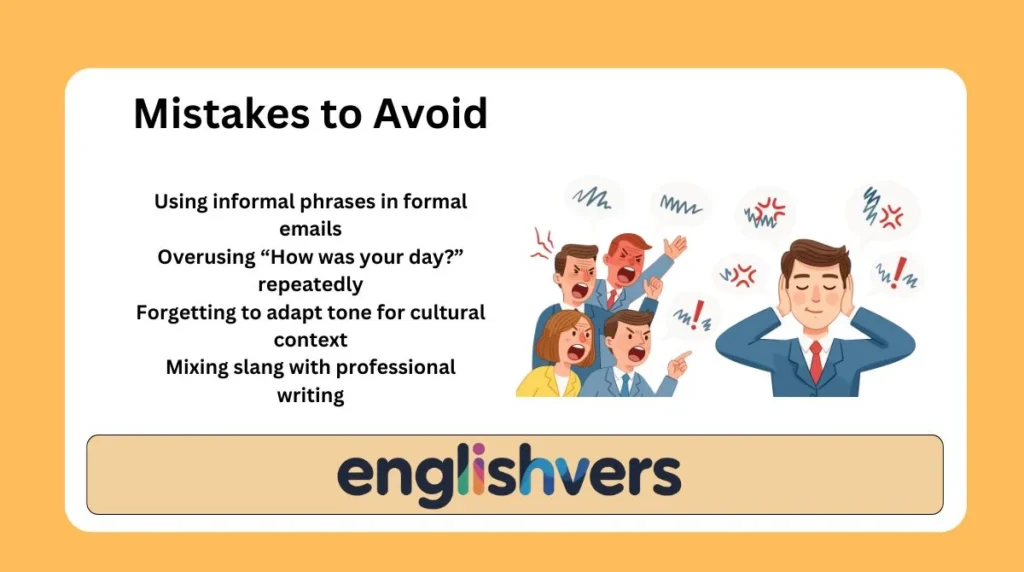
- Using informal phrases in formal emails
- Overusing “How was your day?” repeatedly
- Forgetting to adapt tone for cultural context
- Mixing slang with professional writing
- Using time-specific greetings incorrectly
- Assuming everyone had the same type of day
- Not following up after the question
Cultural & Tone Tips
- Native Speakers: Usually expect a short response; detailed answers are optional.
- UK English: Polite, subtle phrasing preferred; “Hope your day went well” is common.
- US English: Slightly more casual; “How’s your day?” widely accepted.
- Casual Social English: Emojis, slang, or playful alternatives are often used.
Comparison Table of 7 Best Alternatives
| Phrase | Tone | Best Context | Professional Level | Example |
|---|---|---|---|---|
| How’s Your Day Going? | Friendly | Casual chat | Low | “How’s your day going?” |
| Did You Have a Good Day? | Polite | Social, workplace | Medium | “Did you have a good day at work?” |
| How Has Your Day Been? | Neutral/Formal | Email, workplace | High | “How has your day been so far?” |
| Hope Your Day’s Going Well | Polite | Email, call | High | “Hope your day’s going well. Wanted to discuss…” |
| How Did Today Treat You? | Casual | Friends | Low | “How did today treat you?” |
| What Did You Get Up To Today? | Friendly | Informal | Low | “What did you get up to today?” |
| Did Today Go Well? | Neutral | Workplace | Medium | “Did today go well?” |
FAQs
Is “How was your day?” rude?
No, it’s polite and friendly.
Is it okay in emails?
Yes, but better to use more formal alternatives in professional emails.
What is the most formal alternative?
“I hope your day has been going well.”
What is the most polite alternative?
“Hope your day’s going well.”
What should beginners use?
“How’s your day going?” or “Did you have a good day?”
Can it be used in social media messages?
Yes, it’s widely used for friends and acquaintances.
Conclusion
Using varied alternatives to “How was your day?” enhances your English fluency, tone, and professionalism.
Choosing the right phrase for the context—formal, informal, or professional—makes conversations smoother and more engaging.
Practicing these alternatives in daily conversation, emails, or social media helps learners sound more natural, polite, and confident.

Ethan Cole is a passionate language enthusiast dedicated to making English learning simple and enjoyable.