
When someone shares good news, a promotion, or a personal achievement, we often respond with, “I am happy for you.”
This phrase expresses joy, support, and positivity toward another person.
While simple and clear, using the same phrase repeatedly can sound dull, mechanical, or overly casual in professional or academic contexts.
Choosing the right words matters because it shapes how your message is received. The tone can be friendly, professional, formal, or intimate.
For instance, saying “I’m thrilled for you!” to a close friend feels warm, but “I’m delighted by your success” suits a business email better.
Using varied language not only improves clarity but also shows emotional intelligence and professionalism.
Mastering alternatives helps in daily conversation, emails, academic writing, and workplace communication.
What Does “I Am Happy for You” Mean?
Definition: This phrase communicates joy, support, or approval for someone else’s success or good fortune. It emphasizes that the speaker shares the positive feelings of the other person.
Grammar Form:
- Verb phrase
- Interpersonal expression
- Can function as a standalone sentence
Synonyms: thrilled for you, glad for you, delighted for you, overjoyed for you
Opposite tones: disappointed in you, upset about your decision, unhappy for you
Example Sentences:
- Friendly: “I’m really happy for you! You deserve this.”
- Professional: “I am happy for you on your recent promotion. Congratulations!”
When to Use “I Am Happy for You”
Spoken English:
- Use in casual conversations with friends or family.
- Example: “Wow, you passed the exam! I’m so happy for you!”
Business English:
- Expressing congratulations to colleagues or clients.
- Example: “I am happy for you on securing the new contract. Well done!”
Emails / Messages:
- Short, polite alternative for professional emails or messages.
- Example: “I’m happy for you. Let me know if you need any support.”
Social Media:
- Quick and friendly responses to posts.
- Example: “So happy for you! 🎉”
Academic Writing:
- Rarely used formally; could appear in reflective essays or peer feedback.
Professional Meetings:
- Expressing support while maintaining formal tone.
- Example: “I am happy for your successful project completion.”
Is “I Am Happy for You” Polite or Professional?
Tone Levels:
- Polite: Yes, inherently positive and supportive.
- Neutral: Safe for most contexts.
- Strong: Lacks intensity for highly emotional reactions.
- Soft: Gentle, encouraging.
Formal vs Informal:
- Formal: “I am happy for your achievement” – suitable for workplace or client communication.
- Informal: “I’m so happy for you!” – great with friends or family.
Etiquette Tip: Avoid casual forms like “Yay, you did it!” in corporate emails. Use a neutral or slightly formal variant instead.
Pros & Cons of Using “I Am Happy for You”
✔ Pros:
- Universally understood
- Safe for most contexts
- Expresses genuine support
✘ Cons:
- Can sound generic or repetitive
- Lacks nuance for formal or emotional contexts
- Limited professional tone variety
Quick Alternatives List
- I’m thrilled for you
- That’s fantastic news!
- I’m delighted for you
- Congratulations on your success
- I’m overjoyed for you
- I’m genuinely happy about your achievement
- Cheers to your accomplishment!
- So proud of you
- I’m glad to hear that
- I’m pleased with your success
- Kudos on your milestone
- I rejoice in your success
- Well done!
- I’m excited for your progress
- Heartfelt congratulations
- I’m over the moon for you
- This makes me so happy for you
Main Alternatives
1. I’m Thrilled for You
Meaning: Feeling extremely happy for someone.
Explanation: Strong emotion, suitable for close friends or colleagues you know well.
Grammar Note: Idiom / exclamatory phrase
Example Sentence: “I’m thrilled for you! Your project results are amazing.”
Best Use: Informal / Workplace / Text / Social media
Worst Use: Overly formal emails
Tone: Friendly / Excited
Level: Intermediate
Similarity Score: 9
Replaceability Tip: Use for more expressive situations than the neutral “I am happy for you.”
2. I’m Delighted for You
Meaning: Feeling great pleasure about someone else’s success.
Explanation: Polished, slightly formal; conveys genuine joy.
Grammar Note: Adjective phrase
Example Sentence: “I’m delighted for you on your promotion.”
Best Use: Formal / Professional / Email
Worst Use: Casual chat with friends
Tone: Formal / Polite
Level: Intermediate
Similarity Score: 8
Replaceability Tip: Suitable for work emails or formal congratulations.
3. Congratulations on Your Achievement
Meaning: Directly acknowledging success.
Explanation: Professional and clear; shows recognition and support.
Grammar Note: Fixed expression / phrase
Example Sentence: “Congratulations on your achievement. Well deserved!”
Best Use: Formal / Email / Professional / Meetings
Worst Use: Casual chats may feel stiff
Tone: Formal / Neutral
Level: Beginner
Similarity Score: 7
Replaceability Tip: Use when recognition of achievement is key.
4. I’m Overjoyed for You
Meaning: Extremely happy for someone’s success.
Explanation: Strong emotional response; friendly or intimate.
Grammar Note: Idiom / Exclamatory
Example Sentence: “I’m overjoyed for you! Your art exhibition is incredible.”
Best Use: Informal / Friends / Social media
Worst Use: Corporate communication
Tone: Friendly / Emotional
Level: Intermediate
Similarity Score: 9
Replaceability Tip: Use for emotional or personal accomplishments.
5. I’m Glad to Hear That
Meaning: Simple happiness about news shared.
Explanation: Neutral, polite; works in casual and professional contexts.
Grammar Note: Verb phrase / Interjection
Example Sentence: “I’m glad to hear that you’ve secured the funding.”
Best Use: Email / Workplace / Text
Worst Use: Very intimate contexts might need stronger phrases
Tone: Neutral / Polite
Level: Beginner
Similarity Score: 8
Replaceability Tip: Ideal for professional communication where emotion is subtle.
6. Kudos on Your Milestone
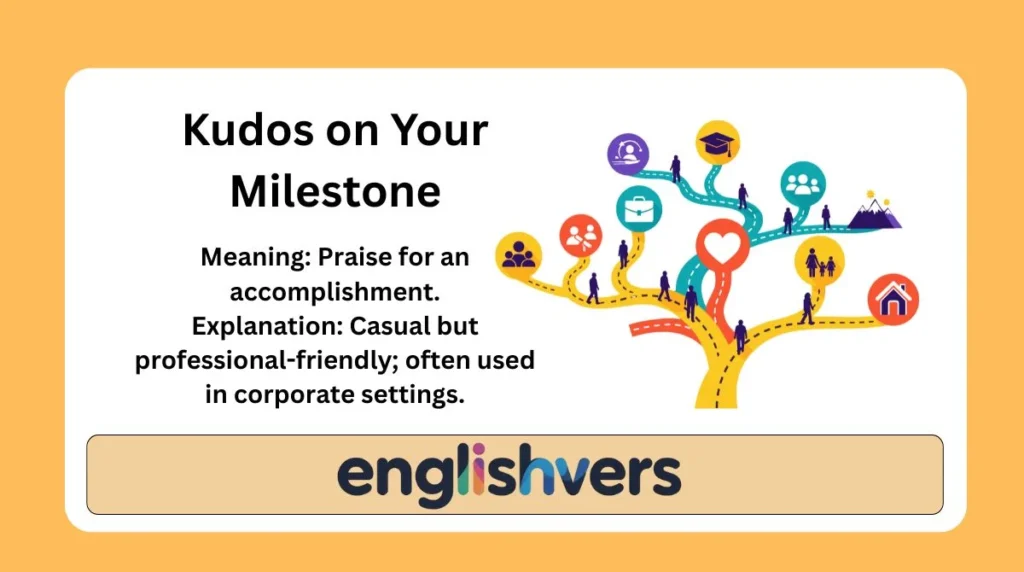
Meaning: Praise for an accomplishment.
Explanation: Casual but professional-friendly; often used in corporate settings.
Grammar Note: Noun / Interjection
Example Sentence: “Kudos on your milestone. Your team did great work.”
Best Use: Workplace / Email / Professional Social Media
Worst Use: Formal letters
Tone: Friendly / Professional
Level: Intermediate
Similarity Score: 7
Replaceability Tip: Choose when informal praise is acceptable at work.
7. I’m Excited for Your Progress
Meaning: Showing enthusiasm for someone’s advancement.
Explanation: Highlights anticipation for continued success.
Grammar Note: Verb phrase
Example Sentence: “I’m excited for your progress on the new project.”
Best Use: Professional / Email / Mentoring
Worst Use: Close friends may find it stiff
Tone: Neutral / Supportive
Level: Intermediate
Similarity Score: 8
Replaceability Tip: Use for ongoing achievements rather than single events.
8. I Rejoice in Your Success
Meaning: Deep, heartfelt happiness for someone.
Explanation: Formal and slightly literary; not common in casual speech.
Grammar Note: Verb phrase / Formal idiom
Example Sentence: “I rejoice in your success and hope for continued achievements.”
Best Use: Formal letters / Academic or ceremonial contexts
Worst Use: Text messages
Tone: Formal / Elegant
Level: Advanced
Similarity Score: 6
Replaceability Tip: Best for highly formal, congratulatory writing.
9. So Proud of You
Meaning: Expressing pride along with happiness.
Explanation: Warm, affectionate; suitable for personal relationships.
Grammar Note: Adjective phrase
Example Sentence: “I’m so proud of you for finishing the marathon!”
Best Use: Informal / Social media / Family / Friends
Worst Use: Formal workplace emails
Tone: Friendly / Emotional
Level: Beginner
Similarity Score: 9
Replaceability Tip: Use with close relationships rather than formal communication.
10. Heartfelt Congratulations
Meaning: Sincere and warm praise.
Explanation: Formal yet warm; suitable for cards, emails, or letters.
Grammar Note: Noun phrase / Formal expression
Example Sentence: “Heartfelt congratulations on your promotion.”
Best Use: Formal / Email / Letter
Worst Use: Casual texts
Tone: Formal / Polite
Level: Intermediate
Similarity Score: 8
Replaceability Tip: Use when sincerity and professionalism are both important.
11. That’s Fantastic News!
Meaning: Expressing excitement about the news shared.
Explanation: Energetic and casual; shows genuine happiness.
Grammar Note: Interjection / Exclamatory phrase
Example Sentence: “That’s fantastic news! You’ve worked so hard for this.”
Best Use: Informal / Text / Social media
Worst Use: Corporate emails
Tone: Friendly / Enthusiastic
Level: Beginner
Similarity Score: 8
Replaceability Tip: Use in casual contexts to celebrate achievements.
12. Well Done!
Meaning: Acknowledging success or effort.
Explanation: Short, neutral praise; fits both formal and informal situations.
Grammar Note: Exclamation / Verb phrase
Example Sentence: “Well done on completing the presentation so smoothly.”
Best Use: Workplace / Academic / Informal
Worst Use: Overused in intimate contexts, can seem robotic
Tone: Neutral / Professional
Level: Beginner
Similarity Score: 7
Replaceability Tip: Quick, safe alternative for acknowledgment.
Mini Dialogue Examples
Formal Dialogue:
- Alex: “I was promoted to team lead today.”
- Jamie: “I’m delighted for you. Your leadership has been impressive.”
Informal Dialogue:
- Sam: “I got into my dream university!”
- Taylor: “Wow! I’m so happy for you! You totally deserve it.”
Business Email:
Subject: Congratulations
Dear Maria,
I am happy for you on securing the new client. Your dedication truly paid off.
Best regards,
John
Mistakes to Avoid
- Overusing “I’m happy for you” in all contexts
- Using casual forms in professional emails (e.g., “Yay, you did it!”)
- Forgetting to adjust tone for the audience
- Using overly formal phrases with close friends
- Ignoring punctuation that conveys enthusiasm (e.g., exclamation marks)
- Mixing slang with formal alternatives (“I’m thrilled, congrats mate!”)
- Being too vague (“Good for you”) in serious achievements
Cultural & Tone Tips
- UK English: Prefers understated expressions (“I’m pleased for you”)
- US English: More enthusiastic and expressive (“I’m thrilled for you!”)
- Casual Social English: Exclamation marks, emojis, and informal phrasing are common
- Tone must match relationship: overenthusiastic praise can feel insincere in formal settings
Comparison Table
| Phrase | Tone | Best Context | Professional Level | Example |
|---|---|---|---|---|
| I’m Thrilled for You | Friendly / Excited | Informal / Social | Low-Med | “I’m thrilled for you! Your book launch is amazing.” |
| I’m Delighted for You | Formal / Polite | Workplace / Email | Med | “I’m delighted for you on your promotion.” |
| Congratulations on Your Achievement | Formal / Neutral | Email / Meeting | Med-High | “Congratulations on your achievement.” |
| Well Done! | Neutral / Professional | Workplace / Academic | Med | “Well done on completing the report.” |
| So Proud of You | Friendly / Emotional | Friends / Family | Low | “I’m so proud of you for finishing the marathon!” |
| Heartfelt Congratulations | Formal / Warm | Letter / Email | High | “Heartfelt congratulations on your success.” |
FAQs
Is “I’m happy for you” rude?
No, it is polite and supportive.
Is it okay in emails?
Yes, with neutral or formal tone adjustments.
What is the most formal alternative?
“I’m delighted for you” or “Heartfelt congratulations.”
What is the most polite alternative?
“I’m pleased for you” works well.
What should beginners use?
“Congrats” or “Well done!” are simple and safe.
Can it be used in social media posts?
Yes, casual forms with emojis are common.
Conclusion
Using alternatives to “I am happy for you” enriches your communication. Different phrases convey varying levels of emotion, professionalism, and sincerity.
By mastering formal, informal, and professional alternatives, you can express joy naturally, improve clarity, and strengthen relationships.
Practice these phrases in daily conversations, emails, and social media to become a more versatile and emotionally intelligent communicator.

Ethan Cole is a passionate language enthusiast dedicated to making English learning simple and enjoyable.