
When you say “I’m excited to join the team,” you express enthusiasm and positivity about starting a new role or project. It shows that you are motivated, eager, and ready to contribute.
However, relying on the same phrase repeatedly can make your communication feel repetitive or less polished.
Choosing the right words matters because tone, professionalism, and clarity influence how others perceive you.
Using varied expressions can make emails, social media posts, essays, or workplace conversations more engaging and precise.
For example, in a formal email, you might write, “I’m thrilled to become part of the team,” while in casual conversation with a colleague,
you might simply say, “Can’t wait to work with you all!” Both convey excitement, but the tone changes with context.
What Does “I’m Excited to Join the Team” Mean?
This phrase communicates enthusiasm about starting a new role, project, or collaboration.
- Grammar form: Complete sentence (Subject + Verb + Object)
- Synonyms: thrilled, delighted, eager, overjoyed, looking forward
- Opposite tones: hesitant, indifferent, reluctant
Sample Sentences:
- “I’m excited to join the team and contribute to the new project.”
- “She is thrilled to join the team and learn from her colleagues.”
When to Use “I’m Excited to Join the Team”
Spoken English: Perfect for casual conversation with peers.
Business English: Useful in interviews, meetings, or introductions.
Emails / Messages: Suitable for welcoming notes or thank-you messages.
Social Media: Great for LinkedIn or company announcement posts.
Academic Writing: Can be used in reflections or collaborative project descriptions.
Professional Meetings: Shows enthusiasm during introductions or team briefings.
Is “I’m Excited to Join the Team” Polite or Professional?
- Polite: Yes, it shows positive intent.
- Neutral: Can be neutral in casual speech.
- Strong: Slightly strong if overused or exaggerated.
- Soft vs. Formal: Soft and friendly; can be made formal by saying “I am thrilled to become part of this team.”
Etiquette Tip: Best for workplace introductions, interviews, and team emails. Avoid using in very formal corporate memos without adjusting tone.
Pros & Cons of Using “I’m Excited to Join the Team”
✔ Pros:
- Shows enthusiasm and motivation
- Easy to understand for non-native speakers
- Polite and friendly tone
- Works in most professional contexts
✘ Cons:
- Can sound generic if overused
- Slightly informal for highly corporate communications
- May lack specificity about your skills or contributions
Quick Alternatives List (One-Line Phrases)
- Thrilled to join the team
- Delighted to be part of the team
- Looking forward to contributing
- Can’t wait to get started
- Eager to collaborate
- Excited to be onboard
- Happy to be joining
- Honored to join the team
- Pumped to start working
- Glad to be part of the team
- Excited about the opportunity
- Looking forward to working with you
- Ready to make an impact
- Overjoyed to join
- Excited for this journey
12 Strong Alternatives to “I’m Excited to Join the Team”
1. Thrilled to Join the Team
- Meaning: Extremely happy to become part of the team
- Explanation: Shows strong enthusiasm and positive energy
- Grammar Note: Adjective + preposition phrase
- Example Sentence: “I’m thrilled to join the team and contribute my skills.”
- Best Use: Formal email, workplace, LinkedIn post
- Worst Use: Casual chat among close colleagues (may sound too strong)
- Tone: Formal / Professional
- Level: Intermediate
- Similarity Score: 9/10
- Replaceability Tip: Use when you want strong but professional excitement
2. Delighted to Be Part of the Team
- Meaning: Very pleased to join
- Explanation: Polite and professional tone, suitable for formal settings
- Grammar Note: Adjective + infinitive
- Example Sentence: “I am delighted to be part of the team and look forward to contributing.”
- Best Use: Emails, meetings
- Worst Use: Informal chats or texts
- Tone: Formal / Soft
- Level: Intermediate
- Similarity Score: 8/10
- Replaceability Tip: Ideal for professional announcements
3. Looking Forward to Contributing
- Meaning: Eager to make a positive impact
- Explanation: Focuses on action, contribution, and collaboration
- Grammar Note: Present participle phrase
- Example Sentence: “I’m looking forward to contributing to the team’s success.”
- Best Use: Emails, meetings
- Worst Use: Casual social media posts
- Tone: Professional / Neutral
- Level: Intermediate
- Similarity Score: 8/10
- Replaceability Tip: Use to emphasize purpose and action
4. Can’t Wait to Get Started
- Meaning: Very eager to begin
- Explanation: Informal, friendly, conveys strong excitement
- Grammar Note: Contraction + infinitive
- Example Sentence: “Can’t wait to get started with the project next week!”
- Best Use: Informal chat, team messages
- Worst Use: Formal emails
- Tone: Informal / Friendly
- Level: Beginner
- Similarity Score: 7/10
- Replaceability Tip: Great for casual workplace conversations
5. Eager to Collaborate
- Meaning: Excited to work with others
- Explanation: Emphasizes teamwork and cooperation
- Grammar Note: Adjective + infinitive
- Example Sentence: “I’m eager to collaborate and learn from everyone here.”
- Best Use: Workplace, meetings, professional emails
- Worst Use: Casual social posts
- Tone: Professional / Friendly
- Level: Intermediate
- Similarity Score: 8/10
- Replaceability Tip: Use when teamwork is key
6. Excited to Be Onboard
- Meaning: Happy to officially join
- Explanation: Professional, friendly, often used in corporate settings
- Grammar Note: Past participle phrase
- Example Sentence: “I’m excited to be onboard and ready to contribute.”
- Best Use: Corporate emails, introductions
- Worst Use: Very casual conversation
- Tone: Professional / Neutral
- Level: Beginner
- Similarity Score: 9/10
- Replaceability Tip: Perfect for HR or onboarding emails
7. Happy to Be Joining
- Meaning: Pleased to start
- Explanation: Polite and friendly, less intense than “thrilled”
- Grammar Note: Adjective + gerund
- Example Sentence: “I’m happy to be joining such a talented team.”
- Best Use: Casual and semi-formal settings
- Worst Use: Formal corporate memos
- Tone: Friendly / Neutral
- Level: Beginner
- Similarity Score: 7/10
- Replaceability Tip: Use when you want softer enthusiasm
8. Honored to Join the Team
- Meaning: Privileged and proud to be part of the team
- Explanation: Formal, respectful, shows humility and professionalism
- Grammar Note: Past participle phrase
- Example Sentence: “I am honored to join the team and contribute to its vision.”
- Best Use: Formal emails, leadership introductions
- Worst Use: Casual conversation
- Tone: Formal / Polite
- Level: Advanced
- Similarity Score: 8/10
- Replaceability Tip: Use for high-level or prestigious roles
9. Pumped to Start Working
- Meaning: Very excited and energetic
- Explanation: Slangy, informal, conveys energy and readiness
- Grammar Note: Slang + infinitive
- Example Sentence: “I’m pumped to start working on this amazing project!”
- Best Use: Casual team chat, social media
- Worst Use: Formal workplace communication
- Tone: Informal / Friendly
- Level: Beginner
- Similarity Score: 6/10
- Replaceability Tip: Best for friendly, energetic contexts
10. Excited About the Opportunity
- Meaning: Grateful and happy for the chance
- Explanation: Professional, polite, emphasizes gratitude
- Grammar Note: Adjective + preposition
- Example Sentence: “I’m excited about the opportunity to join your team.”
- Best Use: Email, interview follow-ups
- Worst Use: Informal chats
- Tone: Professional / Polite
- Level: Intermediate
- Similarity Score: 9/10
- Replaceability Tip: Use when showing appreciation
11. Looking Forward to Working With You
- Meaning: Anticipating collaboration positively
- Explanation: Friendly, professional, shows teamwork focus
- Grammar Note: Present participle phrase
- Example Sentence: “I’m looking forward to working with you and learning from your experience.”
- Best Use: Emails, meetings, LinkedIn
- Worst Use: Slang or casual texts
- Tone: Friendly / Professional
- Level: Beginner
- Similarity Score: 8/10
- Replaceability Tip: Great for polite workplace tone
12. Ready to Make an Impact
- Meaning: Motivated to contribute meaningfully
- Explanation: Shows purpose, ambition, and energy
- Grammar Note: Adjective + infinitive
- Example Sentence: “I’m ready to make an impact and help the team succeed.”
- Best Use: Professional settings, interviews
- Worst Use: Informal casual talk
- Tone: Professional / Strong
- Level: Advanced
- Similarity Score: 7/10
- Replaceability Tip: Use when emphasizing contribution
Mini Dialogue Examples
Formal Dialogue:
A: “Welcome to our team!”
B: “Thank you. I’m delighted to be part of the team and look forward to contributing.”
Informal Dialogue:
A: “Hey, excited for your first day?”
B: “Absolutely! Can’t wait to get started!”
Business Email Example:
Subject: Excited to Join
Dear Team,
I’m thrilled to join the team and contribute to our upcoming projects. Looking forward to collaborating with each of you.
Best regards,
[Name]
Mistakes to Avoid
- Overusing “excited” in every sentence
- Using informal phrases in formal emails
- Forgetting context (slang may seem unprofessional)
- Writing generic phrases without showing contribution
- Confusing grammar forms (“I excited to join” instead of “I’m excited…”)
- Overcomplicating with unnecessary adjectives
- Ignoring cultural tone differences in international workplaces
Cultural & Tone Tips
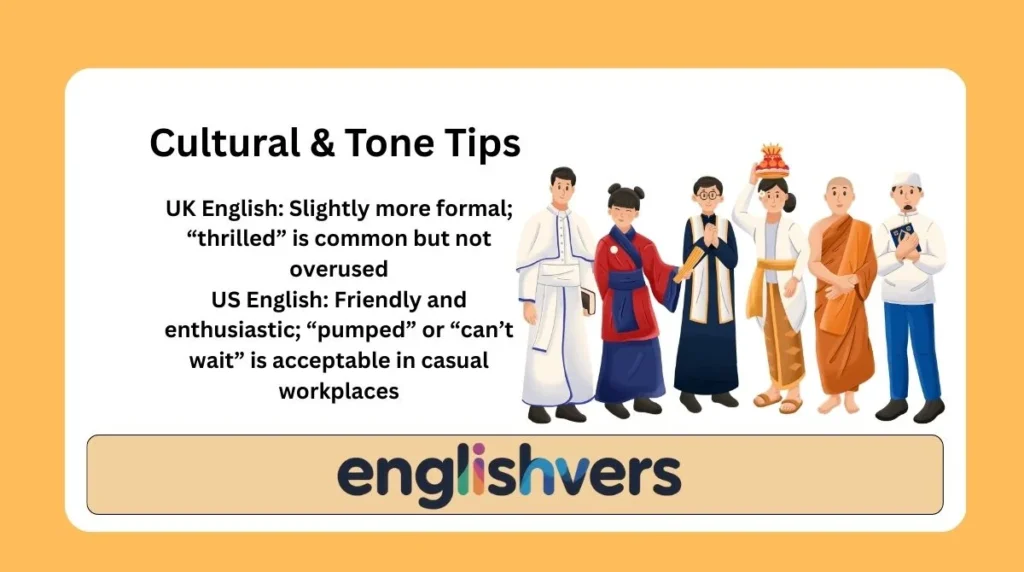
- UK English: Slightly more formal; “thrilled” is common but not overused
- US English: Friendly and enthusiastic; “pumped” or “can’t wait” is acceptable in casual workplaces
- Casual Social English: Slang and informal expressions are welcomed among peers, like “pumped” or “can’t wait”
- Professional English: Stick to “delighted,” “honored,” or “looking forward to contributing” for respect and clarity
Comparison Table of Top Alternatives
| Phrase | Tone | Best Context | Professional Level | Example |
|---|---|---|---|---|
| Thrilled to Join | Formal / Strong | Email, LinkedIn | Intermediate | “Thrilled to join the team!” |
| Delighted to Be Part | Polite / Formal | Email, Meeting | Intermediate | “Delighted to be part of the team.” |
| Looking Forward to Contributing | Neutral / Professional | Email, Meetings | Intermediate | “Looking forward to contributing to the project.” |
| Can’t Wait to Get Started | Friendly / Informal | Chat, Social Media | Beginner | “Can’t wait to get started!” |
| Honored to Join | Formal / Respectful | Senior roles, HR emails | Advanced | “Honored to join the team.” |
| Ready to Make an Impact | Strong / Professional | Interview, Email | Advanced | “Ready to make an impact and help the team succeed.” |
FAQs
Is “I’m excited to join the team” rude?
No, it is polite and friendly.
Is it okay to use in emails?
Yes, especially in introductions and onboarding emails.
What is the most formal alternative?
“Honored to join the team.”
What is the most polite alternative?
“Delighted to be part of the team.”
What should beginners use?
“Happy to be joining” or “Looking forward to working with you.”
Can informal alternatives be used at work?
Yes, only in casual team chats or friendly contexts.
Conclusion
Using varied ways to say “I’m excited to join the team” enhances clarity, professionalism, and tone.
Alternatives allow you to tailor your message to formal emails, casual conversations, or social media posts.
Practicing these phrases improves fluency, confidence, and communication skills.
Start using them in real conversations to make your excitement sound natural, polished, and professional.

Ethan Cole is a passionate language enthusiast dedicated to making English learning simple and enjoyable.